Leave Your Message
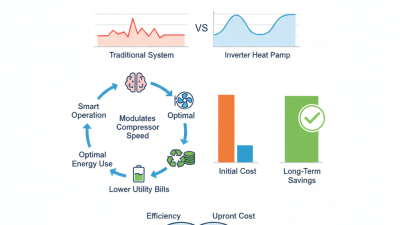
An inverter air conditioner adjusts its compressor speed instead of switching fully on and off. This simple difference changes how the room feels. Traditional systems may blast cold air, stop, and restart with noticeable temperature swings. An inverter model usually runs more steadily, like a car maintaining speed on a level road. The term “Airconditioner Inverter” often describes this variable-speed technology, although wording differs across manufacturers and regions.
In practical use, the benefits become clear during a humid afternoon. The compressor can slow down after reaching the target temperature, helping maintain comfort with less noise. Many homeowners also notice fewer cold drafts near the indoor unit. Energy savings are possible, but they depend on room size, insulation, outdoor heat, filter cleanliness, and thermostat settings. Claims of dramatic savings should be examined carefully. Real results vary.
A reliable evaluation should include the unit’s seasonal efficiency rating, refrigerant type, warranty, and installer qualifications. Correct sizing matters. An oversized system may cool quickly but remove less humidity. An undersized unit may run continuously during extreme heat. I have found that maintenance details are often underestimated; a dusty filter can weaken airflow within weeks. Still, inverter technology is not perfect. Electronic controls can increase repair complexity, and purchase prices may be higher. The best choice balances climate, daily usage, installation quality, and long-term service support. Comfort matters, but measured performance matters more.
What Is an Inverter Air Conditioner?
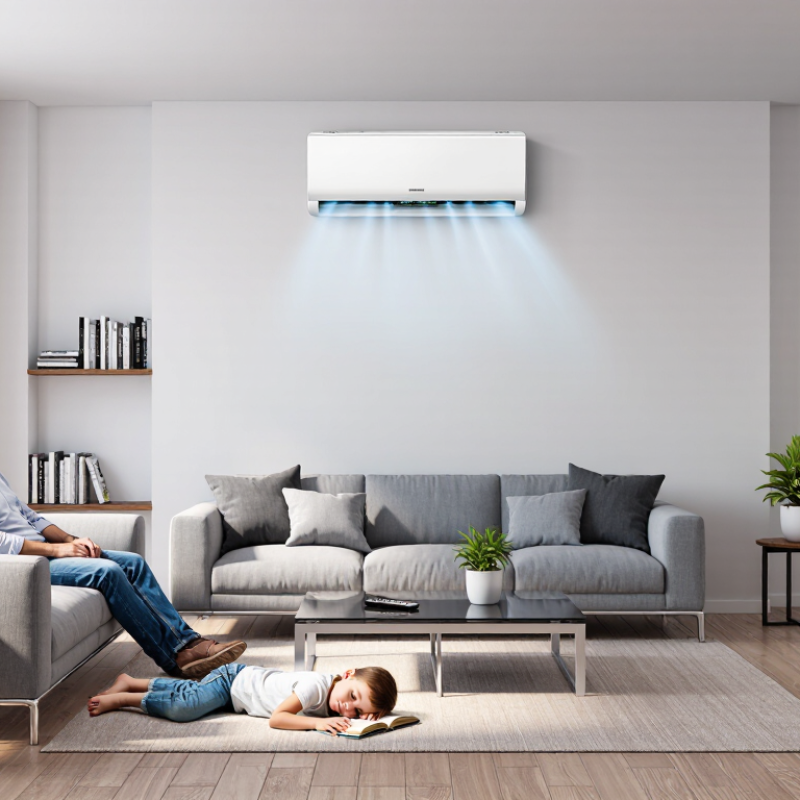
An inverter air conditioner adjusts compressor speed instead of switching fully on and off. It senses indoor temperature and changes its output gradually. This process can maintain a steadier room temperature with fewer sudden cooling cycles. On a hot afternoon, the system may run quickly at first, then slow down after the room reaches the selected setting. That quieter rhythm often feels more comfortable than repeated blasts of cold air.
It can also reduce electricity use, especially during long operating periods. However, savings depend on room size, insulation, outdoor temperature, and thermostat settings. An inverter unit is not magic. An oversized system may still cycle inefficiently, while poor installation can reduce performance. Correct refrigerant charging and clean airflow matter greatly. A qualified technician should check electrical connections, drainage, and the outdoor coil during installation.
Maintenance remains important. Dusty filters make the compressor work harder, even when the inverter controls are working correctly. Cleaning filters every few weeks may help in dusty homes, kitchens, or rooms with pets. Some advantages are easy to notice. The temperature feels more stable, and nighttime operation may be less disruptive. Still, the higher purchase price can make the payback period uncertain. Comparing expected usage, local electricity rates, and repair access gives a more realistic answer than relying on efficiency claims alone.
| Data Dimension | Typical Information | How It Works or Why It Matters | Common Residential Range or Example |
|---|---|---|---|
| Basic Definition | An inverter air conditioner is a variable-speed cooling and heating system. | It adjusts compressor speed instead of repeatedly switching the compressor fully on and off. | Compressor speed changes continuously or in small increments according to indoor demand. |
| Compressor Operation | Variable-speed operation | A variable-frequency drive regulates the electrical power supplied to the compressor motor. | Low speed during temperature maintenance; higher speed during rapid cooling or heating. |
| Temperature Stability | More consistent indoor temperature | The system makes smaller, more frequent adjustments rather than allowing large temperature swings. | Often maintains the room within approximately 0.5–1.0°C of the selected setting, depending on conditions. |
| Energy Consumption | Generally lower during extended operation than comparable fixed-speed systems | Once the target temperature is reached, the compressor can run at a reduced speed and use less power. | Actual savings vary with climate, insulation, set point, usage time, and equipment efficiency. |
| Starting Current | Typically lower than that of a conventional fixed-speed compressor | The compressor usually ramps up gradually instead of starting at full capacity. | Useful in homes where electrical supply capacity or voltage stability is a concern. |
| Cooling Capacity | Modulating capacity | The system can deliver more or less cooling according to the current heat load. | Common room air-conditioner capacities range from about 2.5 kW to 7.0 kW of cooling output. |
| Heating Capability | Available in many reverse-cycle or heat-pump models | The refrigeration cycle reverses to move heat from outdoor air into the building. | Heating performance decreases as outdoor temperature falls and varies by system design. |
| Efficiency Rating | Measured using seasonal efficiency metrics | Cooling efficiency may be reported as SEER or CSPF, while heating efficiency may use HSPF or SCOP, depending on the region. | Higher ratings generally indicate lower energy use under standardized test conditions. |
| Noise Level | Usually quieter during low-speed operation | Reduced compressor and fan speed can lower operating noise after the room reaches the target temperature. | Indoor units commonly operate at approximately 19–40 dB(A), depending on fan speed and model. |
| Humidity Control | Potentially improved humidity management | Longer low-speed operating periods can provide more continuous moisture removal than short on/off cycles. | Performance depends on indoor humidity, coil temperature, airflow, and drainage design. |
| Comfort Response | Fast initial cooling with gradual capacity adjustment | The system can operate at a higher output when the room is warm, then reduce output after reaching the set point. | Useful for bedrooms, offices, living rooms, and other spaces with changing heat loads. |
| Control Features | Electronic sensors and microprocessor-based controls | Temperature sensors monitor indoor conditions and regulate compressor and fan speed. | Common functions include sleep mode, timer control, fan-speed selection, and automatic operation. |
| Installation Requirements | Professional installation is recommended | Correct refrigerant charging, electrical connections, pipe sizing, drainage, and airflow are essential for safe operation. | Requirements depend on system capacity, refrigerant type, pipe length, local codes, and outdoor climate. |
| Maintenance Needs | Regular cleaning and inspection | Blocked filters, dirty coils, or restricted airflow can reduce efficiency and increase operating costs. | Clean filters approximately every 2–4 weeks during frequent use; arrange professional service as needed. |
| Advantages | Efficient modulation, stable comfort, lower operating noise, and reduced starting current | These benefits are most noticeable when the system runs for long periods at partial load. | Particularly suitable for regularly occupied rooms and areas with variable cooling demand. |
| Limitations | Higher purchase price and greater electronic complexity | Advanced controls and variable-speed components may increase upfront cost and require qualified servicing. | Energy savings may be limited if the system is used only briefly or is incorrectly sized. |
| Best Sizing Principle | Match capacity to the calculated heat load | An oversized unit may cycle inefficiently, while an undersized unit may run continuously without reaching the target temperature. | Room area alone is not sufficient; insulation, windows, ceiling height, occupancy, and climate should also be considered. |
Note: The ranges and performance descriptions are typical general values for residential inverter air conditioners. Actual results depend on equipment design, installation quality, climate, building conditions, and operating habits.